Video Teleconferencing is NOT Telemedicine!

OK, I’ll say it. Health is not skin deep. It’s what’s inside that counts too, sometimes much much more.

Recently a paramedic friend in Texas told me about a day where they took their DREAMS Ambulance to a shopping center to provide open public testing or free health screening as a public service to his community. Most of the people that showed up appeared happy healthy and smiling. But, once he began to hook up subjects to his equipment and look at their vital signs, electrocardiogram, blood pressure, etc., he found many of them had very serious health risks. Most appeared just fine on-the-surface, until then.

“Health is not skin deep. It’s what’s inside that counts too, sometimes much much more.”  Roger Lee Heath

Recently my brother went in for surgery on his knee, an old basketball injury. Pretty simple, right? He appeared quite healthy for years. Well, they hooked him up only to find he was a primary candidate for a heart attack and needed a stint from an interventional cardiologist right away to save his life. Previously, this had gone completely undetected.

Just take a look at the photo above. This appears to be a happy healthy couple, unless you find out one has a myocardial infarction (MI) in progress (STEMI) or another has risky tachyarrhythmias or is simply not well perfused and may have an impending risk of stroke. Potentially, it is not as pretty a picture in a strict healthcare context.

Yet, if you look at the prominent telemedicine equipment suppliers today, you may be shocked to find out most have little or no experience in the healthcare field at all; little knowledge of medical devices and acquiring this critical life-saving inside information. Chances are they were ushered into the healthcare industry because someone wanted video conferencing only. A recent television ad shows a patient in an ambulance talking to a doctor in the Emergency Room on a tablet. But, how will this fair as a comprehensive EMS telemedicine system? Most would say generally not very well and perhaps more risky for the healthcare or emergency professional who could make more informed decisions with more complete information. But, who needs urgent care, and who doesn’t? How can these patients be effectively detected and prioritized?

The Main Issue – Care Coordination:

Very recently, I attended a conference at the Cleveland Clinic on healthcare call center development. After almost 40 years working primarily in the Emergency Medical environment I heard terms such as “Care Coordination” and “Patient Care Coordinator”, terms not so common in this industry. Yet, the Emergency Department is really the true front door to most hospitals with up to 80% of patient admissions often occurring there. If one is to reduce medical errors or risks and more clearly determine what level of care a patient needs, how can one go about accomplishing this in a thorough and safe way?

First – Use Really Good Triage and TeleTriage:

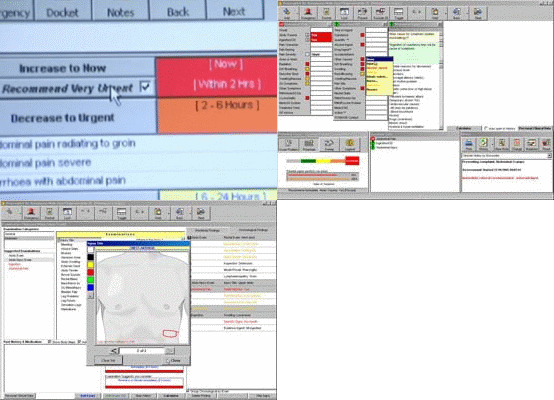
Asking the right questions is important. It can save a life. If you don’t, obviously your risks and chances for medical errors are significantly increased. So how do you ask the right questions? How are they properly clinically referenced, and what are the differential diagnoses? How do you quickly drill down a query to make sure a patient in need doesn’t fall through the cracks. The answer is to use proven Decision Support Software (DSS) to help you do this. It can speed your assessments and assure you are deploying a safety net for those patients in urgent need who otherwise might have gone undetected. It can also save time and eliminate “Over Triaging” by making sure exactly the right questions are asked, not a hand-full of questions that may not directly relate to the exact symptoms before you. When attached to a patient’s medical record, it demonstrates adherence to standards of care and significantly lowers provider risks

Put quite simply, the human brain simply cannot reference millions of words of clinically referenced research, but Decision Support Software can, and it can help you do it within just a few minutes to save a life. It can provide for both accurate and early detection of the risks at hand.

Second – Acquire Physiological Data:

Go beyond video teleconferencing by acquiring vital signs data, ECG, 12-lead, pulse ox, blood pressure, video exam cameras, etc. This gives one the ability to look inside and see what is really happening. This is the only objective way to fully assess the risks. Of course, the modern ambulance may do some part of this already, but almost none fully integrate decision supported triage, video, physiological data, and patient medical record charting into one system.

A proper telemedicine system design should also store this important data together. Most systems don’t. In fact many do not record video, much less important patient physiological data. Of utmost importance is for the telemedicine system to “Tag” patient data for each call, encounter or instance so that one patient’s medical record does not get mixed with another’s. Without this feature, risks for the provider are significantly increased.

If you are in a location where there are no fixed or wireless network connections then this is more important, if an intensivist, EMS professional, neurologist, or cardiologist has to assess a patient’s vitals or early symptoms later. If you operate air or ground ambulances or patient transport operations the system, once in route and connecting to networks, should prioritize this critical data and send the most important life-saving information first to the hospital. Then faster more accurate responses to the problems at hand are assured.

Third – Send the Data “Real-Time”

Ideally critical patient data should be provided Real-Time or “Live”. If you have to send the data to a server somewhere, and critical care professionals have to take the extra time to separately locate that patient’s data, this only prohibits or delays prompt assessments and patient care. The data should be made immediately “Usable”. The difference may be life-saving. In addition, there can be additional costs associated with server services. Patient confidential medical record information may also be more protected when shared with only the select parties or the professionals involved.

Fourth – ePCR EHR (Electronic Health Record) and Data Portability:

In an age where EHR and patient charting has become such an important central focus, a proper telemedicine system design should not only store this critical data, but also allow you to forward the data immediately. An example of this is the sending of a 12-lead ECG to activate a STEMI Alert at a hospital cath lab. The system should allow for full data portability, or the ability to save all this information as one complete report. Then complete information, video and physiologic data, may be attached to the patient’s medical record very efficiently.

It is far better to minimize long-term costs and adopt one system that does it all at the outset.”  Roger Lee Heath

In proper telemedicine design, One System should do it all. The alternative is to try and adapt or cobble together many different video, data and charting components, a real mess. ePCR, EHR, video and data from separate systems can only manufacture a nightmare for Data Portability and delay critical patent care. This also sets the stage for major inefficiencies and running up major costs of deploying telemedicine systems. It is far better to minimize long-term costs and adopt one system that does it all at the outset.

Fifth – Video Conferencing is Important

Video Teleconferencing in healthcare is invaluable, but is just one component in a true comprehensive telemedicine system. That is the opinion, at least, of many who have invested a lifetime in delivery of quality patient care. As put forth by one Medical Director, “A picture is worth a thousand words, but perhaps a video is worth a million words.” A video is the central component in many patient assessments. It is essential in trauma and disaster management to assess method of injury, the patient’s exact state, situational awareness, what disaster and rescue assets are on the scene, and much more. It may even provide for legal protection of medical and rescue personnel, similar to the experience of law enforcement. Video recording may pay for itself over-night in such a situation.

But, Health is not skin deep. It’s what’s going on inside that counts, sometimes much much more.

About:

The above commentary was put together by R. Lee Heath, best known as the inventor making possible the modern Automatic External Defibrillator (AED). His company, LifeBot® is involved in the design and deployment of advanced communications telemedicine hubs and call centers for healthcare coordination.

PDF Download  Download-Print Adobe PDF Version

LifeBot® pro­vides exclu­sive patented and mil­i­tary devel­oped telemed­i­cine solu­tions for emer­gency man­age­ment of hospital-to-ambulance and hospital-to-home com­mu­ni­ca­tions. These sys­tems are used to send and receive live video, voice and patient vital-sign data trans­mis­sions pri­mar­ily in sup­port of heart, trauma and stroke vic­tims in ambu­lances. The company’s patents focus on exten­sion of these life-saving sys­tems into con­sumer use in the home and business.

The sys­tems are also designed for man­age­ment of major crises, dis­as­ters and emer­gen­cies by hos­pi­tal based and field pub­lic safety emer­gency pro­fes­sion­als and for the U.S. Mil­i­tary in bat­tle­field oper­a­tions. We inte­grate next gen­er­a­tion broad­band capa­bil­i­ties not inher­ent in today’s inter­op­er­a­tive dig­i­tal radio com­mu­ni­ca­tions so the ben­e­fits of achiev­ing telemed­i­cine, tele­health, and emer­gency pre­pared­ness objec­tives may all be fully realized. To learn more about these systems, please contact us.

Ambulance 2.0: Bringing Doctor-Quality Care to Ambulances

By Jim Christensen of Hewlett Packard

In the back of an ambulance, every second counts. So imagine that as paramedics race down the street, they can whip out a tablet to help analyze symptoms while a physician at the hospital can help give virtual triage. Touch and tablet technologies are paving the way for some amazing new solutions in healthcare and I recently saw how HP and LifeBot are working to remotely speed up emergency treatment.

LifeBot, an Arizona-based company specializing in telemedicine, is revolutionizing speed of care by enabling EMTs to send video, voice and streamed medical data from the ambulance to doctors back at the hospital. They use the HP Slate 500 to help make this all possible.

Here’s how it works: Inside an ambulance, paramedics wear head-mounted cameras and carry the lightweight 1.5-pound HP Slate. The Slate’s touchscreen allows paramedics to easily input critical medical information while other cameras mounted in the ambulance can be remotely controlled by physicians back at the hospital. There, physicians can use HP TouchSmarts or HP digital signage to draw “play-by-play” on the screen to help EMTs provide better care.

The LifeBot and HP-based solution, on display at HIMSS 2011 last month, simulates how doctors can interact with EMTs from their hospital office. You’ve already seen some pictures here, but you can view more photos from our FLCKR album, or just check out the LifeBot Slate in action:

EMSNetwork: Ambulance 2.0: Lifebot® Technology Creates “Super Ambulances”

Ambulances will soon be getting some major technological upgrades effectively turning them into “super ambulances.” These technologically enhanced ambulances will allow paramedics to share patient data, video feeds and other information in real time with the remote hospital – a revolution in emergency care. This is thanks to Roger Lee Heath, an inventor and entrepreneur with over a dozen patents to his name; his most recent being the LifeBot. It’s a system installed in ambulances to help paramedics and EMTs better communicate with the hospitals on the go – when treatment can be at its most critical stages. Paramedics can get expert instructions from doctors remotely to help keep patients stable and also the hospital is better prepared for the patient’s arrival when using the LifeBot system. Below you can see a video of the system in action. When combined with other Teletriage systems, this system helps create the “Super Ambulances” that EMTs and other first responders have been dreaming of. The platform is the Hewlett-Packard Slate tablet that weighs in at just 1.5 pounds. It features a 3 MP outward facing camera and a VGA inward facing webcam working together to capture both the patient and operator in field use, recording video and capturing still images.

Beyond the immediate capabilities of the device itself though, it is connected to the DREAMS(tm) telemedicine system. DREAMS was developed by the U.S Army Materiel Command for emergency and disaster systems deployments. The system allows for the sending and receiving of live patient physiological data, play-by-play screen color drawing with annotation, isolated video zoom to hi-res imaging, complete patient medical record ePCR charting systems, and multiple camera remote controls.

Aside from the tablet, the ambulance will come equipped with three additional cameras, all remote-controlled from the hospital. This allows the paramedic to focus on the patient while the doctor can take a look at any area they feel is important. The paramedic will also wear a head-mounted camera to transmit not only their work on the patient in the ambulance, but anything going on outside the ambulance before transport, like during a multiple car accident.

LifeBot also includes a barcode scanner to read a patient’s driver’s license. This will more quickly bring up medical information that normally has to be retrieved by radio or wait until the ambulance arrives at the hospital. The ability to be aware of potential hazards that an unconscious patient cannot alert them of is crucial here. If a patient has a pre-existing condition or an allergy to medication that might be used to stabilize them during their trip to the hospital, this will be brought to the attention of the ambulance crew, allowing for the best and most accurate care.

A price cannot be placed on a person’s life, but it certainly can be placed on a LifeBot. It will cost $50,000 to add the entire system to one ambulance. This system is a great investment since it not only saves lives, but also saves money. With the cost of placing a fully-trained doctor in every ambulance being prohibitive, having the watchful eye and advice of the doctor from the hospital will ensure that this system pays for itself relatively quickly. According to Heath, Teletriage can reduce ambulance transport volume by 20 – 60 percent, which saves as much as $2,000 per unnecessary transport.

One of the early target markets for the LifeBot is actually in places with lower technology in general: rural areas. These areas are most in need of this service since ambulance rides there can often be as long as an hour to the closest medical facility. If a paramedic is unfamiliar with a critical procedure that is required to save a patient’s life, a remote doctor can walk them through the entire process. The full coverage inside of the ambulance helps the doctor keep eyes and ears on every aspect of the process almost as if they were there themselves.

I don’t think it will be very long until this system becomes standard for hospitals all around the country.

LifeBot offers many advantages, but what are the concerns? Medical records will always remain confidential, but should patients need to give consent to have their image and likeness recorded in this manner? Most people won’t have a problem with a system designed to save their lives, but will conscious patients have to give their permission before the system is turned on? If so, what would be the procedure for unconscious patients? As systems like these become standard in every ambulance, there could be a selection that we choose on our driver’s license, similar to the choice of being an organ donor. In the meantime though, how do we handle it all?

All in all, what we are looking at here is a substantial advancement in remote medical treatment. If implemented more widely, it should reduce the amount of patients that don’t survive the ambulance ride to hospital where they can get full medical treatment. The system is already in place in select areas within Arizona, Texas, and Florida. Plus with the relatively low cost compared to all of the benefits that the system can provide I don’t think it will be very long until this system becomes standard for hospitals all around the country.

view original article..

LifeBot® Slate Preview: 1.5 pound tablet advanced mobile EMS emergency telemedicine system with DREAMStm developed with the U.S. Military

LifeBot® announced today it has released a preview of its 1.5 pound LifeBot® Slate tablet based EMS emergency telemedicine system that integrates DREAMStm, the $14 million advanced EMS ambulance telemedicine and disaster management system developed by Texas A&M, UTHealth, and the U.S. Department of the Army.

Phoenix, AZ, USA January 29, 2011: LifeBot, LLC announced today a preview of the most powerful portable light-weight tablet for real-time management of critical patients located in remote emergency rooms, ambulances, satellite facilities or intensive care units. At only 1.5 pounds weight the LifeBot® Slate enables unprecedented portability and functionality in a mobile healthcare solution that brings high definition interactive voice and video communications that facilitate access to patients and physicians in real-time no matter where they are located. This system also allows for live transmission of critical patient physiological data using LifeBot®DREAMStm software developed with U.S. Army Materiel Command, Texas A&M, and UTHealth Science Center at Houston.

The LifeBot® Slate PC tablet (similar to, but smaller and more powerful than an Apple iPad) may be used to remotely connect to other LifeBot® DREAMStm systems including telemedicine carts and ambulances. This tablet is also based on Microsoft Windows 7, so it is accepted by DoD and meets most administrative compliance for use in large institutions The LifeBot® Slate absolutely revolutionizes speed of care by enabling any paramedic, neurologist, trauma surgeon, emergency medical specialist to obtain immediate telepresence or remote video, voice and data connections using a simple 1.5 pound portable battery operated PC computer tablet solution.

In an article titled, “New device integrates digital data for EMS” by Dan White, he comments, “The LifeBot® physical package is surprising ergonomic, and somehow intuitive. It feels natural, like grabbing the steering wheel of a car. The LifeBot® only weighs 1.5 pounds, and it is a little smaller form factor than an Apple I-Pad.” and, “LifeBot has the potential to redistribute hundreds if not thousands of man-hours. Instead of taking two minutes to talk through a patient report, which is typically incomplete, you could see everything almost instantly. On patients with less than critical injuries, this feature will save a lot of wasted time.”

In another article entitled, “Interview: Roger Lee Heath´s LifeBot and Super Ambulances” by Neil Versel, he commented, “In a Super Ambulance, paramedics wear cameras on their head and carry the LifeBot system on 1.5-pound HP slate computers. The touch screen allows remote physicians to draw “play-by-play” on the screen to help the EMT provide better care. Other cameras mounted in the ambulance can be controlled by physicians in the trauma center.”

Scientists at Texas A&M University, developers of the DREAMStm system, have tested the LifeBot® Slate and stated, “The Slate is a great platform! It seems to be a very good interface. It is a great platform for the DREAMStm application!”.

For those deploying interoperative emergency communications, the LifeBot® Slate platform may also be used with the LifeBot®Communications Controller. This enables the Slate to be carried as a portable wireless device to perform both radio and telephone communications, including UHF, VHF, 800 MHz, 700 MHz, P25 and broadband voice, video, and data. Mr. Heath, CEO of LifeBot®, indicated, “This is yet another revolutionary aspect of this system. It means EMS and emergency coordinators can carry all their communications throughout an Emergency Department in just one hand.”


LifeBot ® Slate Features and Benefits:Utilizes a Hewlett-Packard Slate at just 1.5 pounds weight and 9.21 x 0.58 x 5.91 inches size integrating a 1.6GHz Pentium PC 2MB RAM and 64GB flash drive with video resolution of 8.9″ diagonal WSVGA wide-viewing angle touchscreen (1024 x 600 or 1024 x 768 for some applications). Integrated 3 MP camera (outward facing); Integrated VGA webcam (inward facing) provides display of both patient and operator in field use. Also enables sending of individual high resolution still images.Utilizes exclusive DREAMStm telemedicine system developed with U.S. Army Materiel Command and others, the most advanced in the world specifically designed for emergency and disaster systems deployments.DREAMStm features include sending and receiving of live patient physiological data, live play-by-play screen color drawing and annotation, isolated video zoom to hi-res imaging, complete patient triage and medical record ePCR charting system, multiple cameras remote controls with management of resolution, panning, zooming, etc. It also may store all trended patient charting and physiological data in its on-board SQL database server.Instant Messaging and Paging: Send instant messaging e-mail alerts and mass file or data distribution to hospitals or providers directly from private secure portal display.
Compatible with other DREAMStm powered LifeBot®systems including mobile telemedicine mobile carts, PC desktops and ambulance systems.Also may be used for TeleStroke, TelePsychiatry, Teletrauma, Dermatology, Translation Services, Primary Care and Correctional Health Systems, Teletriage, and any General Telemedicine application.Gobitm chipset assures reliable connectivity in more locations with the ability to utilize multiple cellular providers, e.g. local Wi-Fi, 3G, 4G, LTE, Verizon, Sprint, etc.PC based compatible with any Microsoft Windows 7 based telemedicine softwares for Radiology and Ultrasound.Accepts all popular Windows 7 compatible examination cameras.Options available for digital biometric readers, exam cameras, digital stethoscopes, otoscopes, and more. Multiple devices may be connected through the Slate docking station.When utilized with the LifeBot® Communications Controller the LifeBot® Slate may also be used to wirelessly perform UHF, VHF, 800MHz, 700MHz, P25 radio and telephone communications.Tested and approved for use with Odyssey Patient Teletriage software that may enhance triage efficiencies and substantially reduce errors and risks.Upgrade path into future patented LifeBot® and DREAMStm applications.AES encryption for HIPAA compliancy.

[hr]

LifeBot® CEO, Heath, indicated that the company is already quoting DREAMStm based systems, including the Slate, as a part of its product line. The company is now considering an invitation to exhibit these systems at the HIMSS Meeting in Orlando next month.

About DREAMStm: 

The DREAMStm (Disaster Relief and Emergency Medical Services) digital emergency medical services (Digital EMS) program is led by famed trauma surgeon and educator, Dr. James H. “Red” Duke, Jr. Dr. Duke is professor of surgery, holder of the John B. Holmes Professorship and chief of surgery at the University of Texas Health Science Center at Houston (UTHealth), as well as medical director of Memorial Hermann Life Flight. The software, hardware, and telecommunications aspects of this program are led by Texas A&M Researcher Larry Flournoy, and Texas Engineering Experiment Station researcher James Wall, Ph.D. The digital EMS program has developed and deployed wireless video communications and combining AVL/GPS (Automatic Vehicle Location/Global Positioning System) technology and advanced software to enable ambulances and helicopters to reach the victim sooner, begin triage, diagnosis and treatment on the scene, and coordinate helicopters and ambulances to minimize transport time to the nearest appropriate facility, using continuous “live” communication with these facilities.

DREAMStm has already been successfully deployed and tested aboard “Super Ambulancestm” in multiple counties of Texas. In addition, these “Super Ambulancestm” also have aided with rescue efforts during the aftermath of the Hurricanes Katrina and Rita. DREAMStmis a tested and proven “battlefield” application.5,6,7

The development of this system was in conjunction with U.S. Army Medical Research and Materiel Command (USAMRMC) through its Telemedicine & Advanced Technology Research Center (TATRC). TATRC performs medical reconnaissance and special operations to address critical gaps that are underrepresented in DoD medical research programs. Versions of DREAMStm also include field and disaster deployable “MASH” style versions that may be dropped into combat theaters and a HMMWV 9978A2 (Humvee) prototype for in-the-field use by the U.S. Military.

About LifeBot®:

LifeBot® provides exclusive patented and military developed telemedicine solutions for emergency management of hospital-to-ambulance and hospital-to-home communications. These systems are used to send and receive live video, voice and patient vital-sign data transmissions primarily in support of heart, trauma and stroke victims in ambulances. The company´s patents focus on extension of these life-saving systems into consumer use in the home and business.

The systems are also designed for management of major crises, disasters and emergencies by hospital based and field public safety emergency professionals and for the U.S. Military in battlefield operations. We integrate next generation broadband capabilities not inherent in today´s interoperative digital radio communications so the benefits of achieving telemedicine, telehealth, and emergency preparedness objectives may all be fully realized.

The company was founded by R. Lee Heath, who is best known as the inventor businessman making possible the life-saving Automatic External Heart Defibrillator (AED) now in common use throughout the world. Mr. Heath was recommended for the Lemelson MIT Prize by American Heart Association officials and other peers. His experience spans almost four decades in the design and deployment of emergency life-support and their communications systems.

PDF Download download PR-Release PDF version

LifeBot® - Connect. Communicate. Collaborate. Save Lives.(tm)

References and Links:

  1. “New device integrates digital data for EMS” by Dan White
  2. “Interview: Roger Lee Heath´s LifeBot and Super Ambulances” by Neil Versel

Interview: Roger Lee Heath’s LifeBot® and Super Ambulances

By Neil Versel – While many in mobile health look at ways to get personal monitoring devices into the home to help manage diseases, several figures with deep backgrounds in trauma care are trying to commercialize a system to prevent death from heart attacks and stroke.

Central to this effort is Roger Lee Heath, an inventor and entrepreneur who holds dozens of patents including for the technology that enabled the automatic external defibrillator. Widely known in emergency medicine but a relative newcomer to health IT, Heath now heads a Tempe, Ariz.-based company called LifeBot that could be on the verge of bringing advanced telemedicine mainstream.

In November, LifeBot signed an option to commercialize the Disaster Relief and Emergency Medical Services (DREAMS), a $35 million ambulance-based telemedicine and disaster-management system. DREAMS, developed by the University of Texas Health Science Center at Houston and Texas A&M University in conjunction with the U.S. Army’s Telemedicine and Advanced Technology Research Center (TATRC) and the U.S. Army Materiel Command, powers what’s being touted as a “Super Ambulance.” The system, now in use in a handful of rural Texas counties, provides live transmissions of multiple remote-controlled cameras, telemetry data and patient records between ambulances and hospital emergency departments and trauma centers.

Principal Investigator Dr. S. Ward Casscells, a former assistant secretary of defense for health affairs, led the DREAMS project and won several awards for his work. Trauma surgeon Dr. James H. “Red” Duke Jr., who treated Texas Gov. John Connally after the shooting that killed John F. Kennedy, created the Super Ambulance and tested DREAMS on Memorial Hermann Life Flight air ambulances. He used the system to remotely triage patients affected by Hurricanes Katrina and Rita in 2005.

view full article

Where We Need to Be – A Digital Diagnosis and DREAMS™

The Joint Advisory Committee (JAC) released a Report to Congress that commented about the DREAMS™ EMS Emergency Ambulance Telemedicine System pursuant to the recommendations of the 9/11 Commission Act.

The Joint Advisory Committee on Communications Capabilities of Emergency Medical and Public Health Care Facilities (Joint Advisory Committee) was established by the Chairman of the Federal Communications Commission and the Assistant Secretary for Communications and Information, U.S. Department of Commerce pursuant to the Implementing Recommendations of the 9/11 Commission Act of 2007. The Joint Advisory Committee’s mission is to examine the communications capabilities and needs of emergency medical and public health care facilities.

The Committee released a Report to Congress dated February 4, 2008. The report details the status of communications systems for EMS and health care systems and possible technologies that may be utilized to advance beyond the current state of most communications.

The report commented about the accomplishments of DREAMS™:

“In Texas, they put their digital dreams on the road. The DREAMS™ (Disaster Relief and Emergency Medical Services) effort links medics in the field with doctors in the emergency room. This digital EMS system includes a high tech interactive digital ambulance. The program develops and tests a variety of telemedicine and telecommunications technologies that feature real time remote monitoring of patients who are in locations where hospital care is not readily available. These technologies are being designed to offer emergency medical care in rural areas, on the battlefield, and in disaster areas.

The program has resulted in numerous accomplishments, discoveries, and improvements. These digital ambulances – capable of communicating with voice, video, or text can deliver high quality video and real time patient data to the remote ER physician, greatly enhancing the physician’s situational awareness in the ambulance to support the medical decision making process.

The ambulance hardware integrates communications systems with commercial, off the shelf medical and computer devices such as digital video cameras, GPS navigation systems, rugged laptops, signature pads, bar code scanners, vital signs monitors, 12 lead EKGs, portable blood analyzers, ultrasounds and more.

The system allows the ER physician to receive video, audio, real time medical data, and text from the ambulance and transmit audio, text, and video annotations to the ambulance. The ER physician can remotely control the multiple video cameras in the ambulance to pan, tilt, or zoom to view the patient’s injuries. With colored, on screen markers, the physician can coach the EMTs through treatment that extends beyond normal EMS protocols.

To make it all possible, they combine multiple low bandwidth communications systems like cell phones, satellite phones, and data radios in order to produce enough bandwidth to send things like video.”

PDF Download view full version of JAC Committee report..

DREAMStm : A Highly Developed EMS Ambulance Telemedicine System

DREAMS™ PROJECT (Disaster Relief and Emergency Medical Services) is a major development effort to address many important issues in emergency medicine and disaster relief. No other such system has under-gone such extensive scrutiny and extensive evaluation of so many important issues by so many leading scientists and engineers.

The following was prepared by S. Ward Casscells, M.D., former Assistant U.S. Secretary of Defense (Health Affairs). Dr. Casscells participation in the DREAMStm Project helped to earn him the General Maxwell R. Thurman Award, the Department of Health and Human Service’s Best Public Health Practice Award, and the Memorial Hermann Health System’s Hero Award. more info..

(The following material is taken from defenseofhouston.com to demonstrate the extensive plan and development of the DREAMStm system which encompasses many subjects related to disaster management and emergency medicine. Defense of Houston was made possible by the Disaster Relief and Emergency Services (DREAMS) program of the US Army based at the University of Texas Health Science Center at Houston and Texas A & M University (DoD grant no.DAMD17-98-1-8002). DREAMStm physicians and scientists acknowledge with gratitude the vision, leadership, and advice of Senator Kay Bailey Hutchison, and Congressmen Tom DeLay, Ken Bentsen, Henry Bonilla, and Kevin Brady.)

DREAMS is a US Army-sponsored program led by The University of Texas Health Science Center at Houston, Texas A&M University, Texas Heart Institute and Memorial Hermann Hospital. The program is aimed at improving the care of emergencies, both on the battlefield and in civilian life. It takes advantage of Houston’s high incidence of medical emergencies and surgical trauma, including natural disasters and industrial accidents, to test the latest technologies for emergency care. The work is divided into three broad areas: Digital EMS (Emergency Medical Services), Chemical Warfare Defense, and STAT (Science Triage and Treatment), a program aimed at improving the diagnosis and treatment of tissue injuries.

Desert Storm, Bosnia, the bombings in Oklahoma City and at the World Trade Center all demonstrated opportunities for improvement. We proposed to the Army that Houston could help, because of the high incidence of blunt and penetrating trauma, and because The Texas Medical Center (the world’s largest), The University of Texas and Texas A&M University combine leading medical bioengineering and telecommunications research. The Army and Congress agreed, and the $18m spent to date has accomplished all that was expected, and more.

The DREAMS program has resulted in numerous discoveries and inventions, as well as a good deal of television coverage. Some examples are included in the enclosed DREAMS video, which also documents the strong support from former President Bush, Senator Hutchison, General John Parker, Representatives Delay, Bentsen, Archer, Bonilla, Mayor Lee Brown, former Governor Bush and FEMA.

Also noteworthy are the spin-offs. For example, the DREAMS program initiated four years ago to deploy automatic external defibrillators in Houston has led hundreds of businesses, churches, civic groups, apartment houses, medical offices and clubs to purchase these devices. Dozens of survivors of sudden cardiac arrest are ample testimony to the success of this program. We are happy to report that the City of Houston, led by the fire department’s EMS director, David Persse, M.D., and Mayor Lee Brown, have made Houston the most advanced city in the nation in the deployment of AEDs.

A second important spin-off has been the Houston Task Force for Counter terrorism. Ambassador Ed Djerejian, Director of the James A. Baker, III Institute for Public Policy at Rice University, has taken the lead in organizing this task force, on which Dr. Duke and Dr. Casscells serve, together with the Mayor, FBI leaders, public health officials and presidents of the leading institutions in The Texas Medical Center.

Finally, DREAMS has already spun off at least two companies. One is Intelligent Diagnostics, a Web site that helps people rapidly evaluate their symptoms and decide whether (after consultation with their doctor) they can safely ignore or watch these symptoms, or whether they need a doctor’s appointment or an immediate visit to the emergency room. The goal is to decrease deaths (e.g., due to misunderstanding the warning signs of heart attack) and, conversely, decrease unnecessary visits to the doctor or emergency room.

Another spin-off is Volcano Therapeutics, Inc. This company is developing catheters to detect inflamed regions and local areas of inflammation, which are signs of vulnerable atherosclerotic plaques (precursors to heart attack and stroke) or cancer.

DREAMS has been a successful public-private partnership. It has funded a program too broad for the mandate of the NSF, too high-risk for the mandate of the National Institutes of Health, and not “risky enough” for the mission of DARPA. The Congressional support has been critical in catalyzing this unique program. Listed below are the projects for which $10M is requested from Congress for the FY 2002 Army budget.

I. DIGITAL EMS. The digital emergency medical services (Digital EMS) program is led by famed trauma surgeon and educator, Dr. James H. “Red” Duke, Jr., the pioneer of helicopter rescue. Dr. Duke is the Holmes Professor of Surgery at UT Houston and Medical Director of LifeFlight. The software, hardware and telecommunications aspects of this program are led by Texas A&M Professors, Jim Wall, Ph.D., and Larry Flournoy, under the leadership of A&M’s Vice President for Research, Professor Richard Ewing, Ph.D. The digital EMS program is developing wireless video communications and combining GPS (Global Positioning System) technology and advanced software to enable ambulances and helicopters to reach the victim sooner, begin diagnosis and treatment on the scene, and coordinate helicopters and ambulances to minimize transport time to the nearest appropriate facility, using continuous communication with these facilities and Houston’s Intelligent Highway System. Other technical support for this program is generously provided by Johnson Space Center and the U.S. Navy. Details of the current work follow: (per Joan Tatge and Doug Tindall).
[hr]

II. CHEMICAL WARFARE DEFENSE. Per A&M

III. SCIENCE, TRIAGE AND TREATMENT (STAT). The Science, Triage and Treatment (STAT) program complements the Digital EMS and Chemical Warfare Defense Program by focusing on the basic and applied sciences that will enable us to better diagnose and treat injuries. The program is led by James T. Willerson, M.D., Randall Professor and President, UT Health Science Center at Houston, Medical Director of the Texas Heart Institute, Editor-in-Chief of Circulation, member of the Institute of Medicine, and the American College of Cardiology’s Distinguished Scientist for 2000.

Body Defenses Against Chemical and Biological Threats.

Detection and Quantitation of Bacillus anthracis in Macrophages. Under the direction of Theresa M. Koehler, Ph.D., scientists are investigating the germination and growth of the anthrax bacterium in macrophages, a critical early step in anthrax pathogenesis. B. anthracis is considered to be among the microorganisms with potential use as a biological weapon in a terrorist or military act.

Up-Regulation of P450–a Natural, Broad-Based Defense Against Chemical and Biological Threats. Henry Strobel, Ph.D., and colleagues are studying the cytochrome P450 system. The lungs are the major point of entry for microbes and airborne toxins. This project will characterize the response of cytochromes P450 to infection. The eventual goal is to maximize the protection afforded by P450 cytochromes in the lung by gene therapy or pharmacologic up-regulation of P450s.

[hr]

B. New Diagnostic Techniques.

1. Is Hypothermia Helpful in Triage?

Ward Casscells, M.D., Tyson Distinguished Professor and Chief of Cardiology, and colleagues have discovered a simple but previously unsuspected finding, namely that a fall in body temperature is an accurate predictor of death within hours or days in patients with congestive heart failure. If this finding is also applicable to patients with surgical shock and other conditions (and Dr. Duke believes it is), this would provide a simple, fast and inexpensive way to improve triage, the imperfect process in which medical personnel try to divide the injured into those who need immediate help in order to survive, those who cannot be helped, and those whose injuries can wait.

2. Infrared Spectroscopic Diagnosis of Vulnerable Atherosclerotic Plaques.

Morteza Naghavi, M.D., and colleagues are developing the use of infrared spectroscopy, an instantaneous, noninvasive and relatively inexpensive technology–to detect areas of inflammation, areas of cell death, and foreign bodies. The model they have been using is atherosclerotic plaque, the leading cause of heart attack and stroke. The progress made to date suggests that it will soon be possible to identify vulnerable plaque earlier and intervene to prevent heart attack and stroke. Detection of abscesses, necrosis, and malignancy may follow from this work.

3. Thermal Detection and Treatment of Inflammation and Necrosis.

A second and even simpler means of approaching the above problems is being developed by S. Ward Casscells, M.D., and colleagues. They have discovered that thermal imaging is a feasible means of detecting vulnerable atherosclerotic plaque. Alone, or in combination with the infrared spectroscopy being developed by Dr. Naghavi, thermal imaging holds great promise in preventing heart attack and stroke. A second discovery by Dr. Casscells is that heat has an anti-inflammatory effect. Casscells and colleagues are developing this into a treatment to reduce inflammation, for example, to prevent heart attack and stroke.

4. Physiological Magnetic Resonance Imaging.

James T. Willerson, M.D., and Morteza Naghavi, M.D., have developed ways that magnetic resonance imaging can be adapted to provide noninvasive thermal mapping. They have further developed a technique for imaging inflammation by adapting a paramagnetic particle for high specificity uptake by macrophages. They are also exploring the therapeutic potential of magnetic resonance-induced heating.

5. A Surgical Instrument for Real-Time Tissue Analysis.

S. Ward Casscells, M.D., is developing a device that uses multiple biophysical techniques to determine, on line, the type of tissue and the state of its health. This should prove useful to surgeons, gastroenterologists and others who need to make tissue diagnoses on line, for example, during cystoscopy, bronchoscopy, laparoscopy, arthroscopy, etc.

[hr]

C. Extending the Golden Hour.

1. Evaluation of a New Axial Flow Pump, Inserted by Minimally Invasive Thoracotomy, to Maintain Cardiac Output in a Porcine Model.

O.H. Frazier, M.D., is determining whether the Jarvik 2000 pump, pioneered by him at the Texas Heart Institute, can be used urgently to support victims of hemorrhagic shock. He has developed a porcine model to determine whether clinical trials are warranted.

2. Mechanisms of Cardiomyocyte Injury in Shock.

L. Maximilian Buja, M.D., Dean of the Medical School, and Jeannie McMillin, Ph.D., are dissecting the roles of cytokines and reactive oxygen species in the injury caused to the heart after reperfusion, such as during resuscitation of shock victims. In our studies with the endotoxin, lipopolysaccharide (LPS), a know initiator of programmed cell death (apoptosis) in other systems, we found that our cultured neonatal cardiomyocytes are resistant to the LPS cell death-signaling cascade even though the same cells are capable of undergoing apoptosis in response to chronic exposure to the saturated fatty acid, palmitate. In our most recent studies, we demonstrated that the anti-inflammatory prostanoid, CydPGJ2, prevents nuclear translocation of NFkB and phosphorylation of IkB alpha, inhibits secretion of TNF-alpha when added prior to LPS and results in a 10-fold activation of caspase 3-like activity (a key enzyme in apoptosis). We find these results to be extremely exciting as they suggest (in agreement with other investigators) that gene transcription by NFkB is cardioprotective and that synthesis of the anti-inflammatory PGJ2 may be suppressed in the neonatal cardiomyocytes compared to adult ardiomyocytes, thereby conferring differential susceptibility to apoptosis in adults versus neonates. We are actively pursuing the implications of these findings in our current work.

3. Molecular Regulation of Apoptosis in Wound Healing. 

Yong-Jian Geng, M.D., Ph.D., is trying to determine: 1) the effects of heat or gene expression, 2) the role of heat-shock proteins in inflammation and apoptosis using the model of experimental atherosclerosis, 3) the mechanism of preferential sensitivity of macrophages to thermal apoptosis, 4) whether oxidized LDL cholesterol interferes with the apoptosis clearance mechanism.

4. Nitric Oxide in Organ Failure.

Bruce Kone, M.D., is exploring the beneficial and detrimental effects of nitric oxide—which impacts thrombosis, vascular tone and apoptosis—in models of sepsis and multiple organ failure.

5. Nitro Tyrosine Formation, Metabolism and Function.

Ferid Murad, M.D., Ph.D., Using endotoxin and/or various proinflammatory cytokines to induce inflammation in animals and/or cell culture systems, we are identifying proteins that are nitrated on their tyrosine residues. Protein nitration can occur due to increased formation of nitric oxide, superoxide anion and peroxynitrite that results from inflammation and tissue injury. The identification of these nitrated proteins and their function could provide new approaches for therapy of inflammation and tissue injury.

[hr]

D. Prevention of Complications, Promoting Wound Healing and Regeneration.

1. Gene Transfer of Tissue-Factor Pathway Inhibitor to Prevent Thrombosis and Restenosis after Arterial Injury.

Pierre Zoldhelyi, M.D., is developing improved gene therapy techniques to prevent the blood clotting and subsequent restenosis that often complicates angioplasty and other interventions.

2. Induction of Chemokine Expression in Endothelial Cells by C-reactive Protein.

Ed Yeh, M.D., Chairman of Cardiology at M.D. Anderson Cancer Center, is characterizing the adhesion molecules that mediate the adhesion of monocytes to atherosclerotic plaques.

3. Pathophysiology, Prevention and Treatment of Atrial Arrhythmias.

Hasan Garan, M.D., the President George H.W. Bush Professor of Medicine, is exploring the feasibility, in an animal model, of a less damaging means of eliminating clusters of cells that cause cardiac arrhythmias.

4. Genes Regulating Wound Healing and Susceptibility to Oxidative Injury.

Using an inbred canine model of atherosclerosis as a model of chronic wounding and oxidative stress, James T. Willerson, M.D., is identifying novel genes involved in the response to these stresses.

[hr]

Disaster Relief and Emergency Medical Services Project (DREAMStm):

UT-Digital EMS Project:

That life threatening injuries and acute illnesses occur on the battlefield, on highways and in urban settings is a harsh reality. It is also a fact that early accurate diagnoses and institution of appropriate therapy improves survival in many instances. During recent decades, significant progress has been made in reducing the interval between the onset of the problem and the institution of treatment as a result of the development of skilled medics and paramedics and improved equipment modes of rapid transportation. With recent advances in telecommunication technology, it is now possible to decrease even further the time lapse between the incident and the institution of appropriate therapy utilizing digital technology to transmit real time physiologic data and two-way audio- visual communications. It will be possible to have physician present on the battlefield or the highway mentoring the first responding medical personnel which will improve outcome in many instances through improved diagnoses, implementation of life saving procedures and institution of definitive treatments. Wherever possible new military technologies for combat casualty care will be integrated into the program. DREAMST builds upon an earlier USAMRMC DAMD 17-98-2-8002 and the Advanced Research Projects Agency (ARPA) sponsored project titled, “Advanced Fire Protection Technologies”, June 23, 1995, where UTHSCH tested a prototype “Emergency Information Resource and Response Management System.”

University of Texas Health Science Center at Houston Digital EMS Project

1. Work with Texas A&M University to Enhance Current Technologies within the Digital EMS Vehicle and Associated Hospital Systems — The University of Texas Health Science Center at Houston (UTHSCH) personnel will work closely with Texas A&M University System (TAMUS) to continue the design, development, integration, and operation of a system (Digital EMS) which allows telecommunication (video, voice, and data) between rural and remote emergency services and the physicians in the trauma center. UTHSCH is responsible for the identification of candidate medical technologies for inclusion by the TAMUS Digital EMS design team. Additionally, UTHSCH will develop online medical rotocols of currently approved Life Flight emergency protocols to be integrated into the Digital EMS project by TAMUS project team.

2. Enhance the Existing Digital EMS System to Accommodate Additional Functionality –UTHSCH personnel will work in close collaboration with the Naval Research Laboratory (NRL) to develop a next generation satellite-networked system capable of two-way audio, video, and data communication between an ambulance and the UTHSCH.

3. Integrate Online Treatment Protocols and Medical Records Information into the Existing System for Enhancing System Functionality — Using approved medical treatment protocols and Digital EMS technology, UTHSCH physicians will perform expeditious patient evaluations and guide appropriate interventions. Where available, UTHSCH will create access to emergency records databases queried for patient specific medical information allowing the TAMUS design team to integrate previous medical history into the emergency medical record as directed by the UTHSCH medical director.

4. Enhance the Existing Infrastructure for Supporting a Network of Multiple Digital EMS Vehicles and Hospital Systems in an Integrated Environment – UTHSCH will link the UT-Houston Medical School and the TAMUS’ Institute of Biosciences and Technology (IBT) facility via a private fiber network path. The fiber path will allow the Digital EMS facilities at UTHSCH and the affiliated teaching hospital, Hermann Hospital, to communicate at a high data rate to multiple statewide, national, and international high bandwidth networks at the IBT gigapop.

5. Develop and Test a Prototype Digital EMS Vehicle in Diverse Urban and Rural Settings for Evaluation and Performance Analysis of Integrated Digital Technologies — As integrated by the Texas A&M System Engineering team, deploy new Digital EMS vehicles and technology in several rural and remote locations within Texas. Digital EMS prototypes tested in these field locations provide user feedback during real life emergency calls.

6. Study of Developed Technologies for Application in the Digital EMS Life Flight Vehicles to Support Additional Medical Functionality for Trauma Care at Remote and Hospital Sites – The Digital EMS system includes plans for outfitting rotary and fixed wing aircraft used by the Hermann Hospital Life Flight service. Re-certification of the avionics and airframe for the installation of new communications hardware and computer systems developed by the Digital EMS team is expected. The extent of the process is unclear at this time, but UTHSCH and TAMUS researchers are committed to serious consideration to outfit Life Flight vehicle(s) with Digital EMS technology.

7. Evaluation of New Technologies for Inclusion in the Digital EMS Vehicle to Support Additional Medical Functionality for Trauma Care at Remote and Hospital Sites – Noise within the ambulance patient compartment is a problem if the Digital EMS computer system is to use advancing technologies like voice recognition software for command and control. UTHSCH has identified several methods for noise cancellation developed by others in industry and will valuate the candidate technologies for the Digital EMS vehicles.

8. Develop Methodologies for Using New Local, State, and National Network Infrastructures for Providing the Digital EMS Vehicles with High Speed Terrestrial Connectivity to the Hospital Nodes – UTHSCH will work closely with TAMUS and with organizations funded under the Texas Infrastructure Fund, Internet2, and the National Science Foundation networking initiatives to provide high speed terrestrial connectivity.

9. Publish Findings and Results in Appropriate Conference Proceedings and Journals and Demonstrate Capabilities of the Digital EMS Ambulance.

10. Provide Project Progress Reports Quarterly

[hr]

Executive Summary / Project Overview:

The Disaster Relief and Emergency Medical Services (DREAMStm) project is a consortium of scientists, medical professionals, and engineers from The University of Texas Health Science Center at Houston (UTHSCH) and the Texas A&M University System. The goal of DREAMS is to improve the diagnosis and treatment of critically ill or injured soldiers in the field by expediting their access to medical experts at trauma centers or field hospitals. DREAMS will test the new systems developed in this program in varied rural, remote and urban settings in Texas. We hope to qualify and overcome not only the technology issues while communicating with a mobile distant emergency vehicle, but also to develop procedures for tele-mentoring of remote medics and other medical personnel through the transportation and transfer of critically injured people.

The UT-Digital EMS Project builds upon an earlier USAMRMC DAMD 17-98-2-8002, February 3, 1998, and the Advanced Research Projects Agency (ARPA) sponsored project titled, “Advanced Fire Protection Technologies”, June 23, 1995, where UTHSCH tested a prototype “Emergency Information Resource and Response management System”. UTHSCH researchers and engineers are working on two components of the DREAMS program:

1. The University of Texas Digital EMS Project, and

2. Mechanisms, Diagnosis, and Treatment of Tissue Injuries.

*************** [NOTE: Now renamed STAT]****************************
[hr]

1.1 The University of Texas Digital EMS Project

Digital EMS is the DREAMS component that allows trauma and other medical specialists to treat patients more quickly by providing a “virtual” presence of a physician on the battlefield or at the emergency scene. Physicians and engineers of the UT-Digital EMS team provide medical direction, practical knowledge, and experience to apply advancing technologies to the treatment of patients before they reach the trauma center. Additionally, the UT-Digital EMS team identifies candidate medical technologies for inclusion in the Digital EMS project, develops online medical protocols, and supervises field-testing of the Digital EMS emergency vehicles. UT-Digital EMS researchers and Texas A&M System Digital EMS engineers completed the Digital EMS phase one ambulance prototype, InteractTM, shown at the ATA 1999 conference in Salt Lake City. InteractTM connects emergency medical personnel on the scene with trauma specialists in distant hospitals, allowing physicians to monitor patients using real-time video and vital signs data from a suite of advanced digital medical monitoring equipment. The proposed duration of this subproject is 18 months from December 1, 1999 through May 31, 2001.

1.2 Mechanisms, Diagnosis, and Treatment of Tissue Injuries

Researchers at UTHSCH will submit a separate proposal for the DREAMS:

Mechanisms, Diagnosis, and Treatment of Tissue Injuries (MDTTI). While the Digital EMS projects at UTHSCH and Texas A&M University are ready to field test new therapies developed by the MDTTI Project, the MDTTI proposal is completely separate in scope of work and deliverables. Hence, details of the MDTTI Projects are not addressed in the present proposal. Please refer to the Mechanisms, Diagnosis, and Treatment of Tissue Injuries proposal (Log No. 99200002) for more information their role in DREAMS Project.

1.3 Role of Texas A&M University Collaborators

Researchers at Texas A&M University will submit separate proposal for their role in the DREAMS: Digital EMS project. Texas A&M University will continue to work closely with the UT-Digital EMS Project team to develop the medical needs of remote and rural emergence medicine into an integrated system of varied communications and medical technologies to fulfill the identified goals of the Digital EMS project. Hence, detailed engineering and design of the TAMUS project are not addressed in the present proposal except where necessary for clarification of UT-Digital EMS work. Please refer to Texas A&M University’s proposal (Log No. 99200004) for more information their roles in DREAMS Project.

LifeBot® Signs Option for DREAMStm : The $14 million advanced “Super Ambulance” emergency EMS telemedicine system developed with U.S. Army Materiel Command

LifeBot® announced today it has executed an Option Agreement pursuing world-wide exclusive licensing rights to DREAMStm, the $14 million advanced EMS ambulance telemedicine and disaster management system developed by Texas A&M, UTHealth, and the U.S. Military.

Phoenix, AZ, USA November 17, 2010: LifeBot, LLC acted today to expand its leading technology position in emergency telemedicine communications. Combining DREAMStm with LifeBot® patented technologies promises to make available the most powerful and advanced prehospital EMS communications systems. Considered by many to be the most highly developed ambulance to hospital EMS telemedicine communications system ever deployed, DREAMStm is the first and only system to provide fully interactive simultaneous “live” transmissions of video and critical patient data. The system in essence brings hospital specialists to the scene giving to doctors and nurses a virtual telepresence to collaborate in saving lives and managing disasters in real time, on the “battlefield”, at home or abroad.


DREAMS™ slide-show shows what features make a Super Ambulance for EMS telemedicine.

The “Super Ambulancetm” system utilizes multiple remote controlled cameras to provide hospital based emergency specialists invaluable live intelligence, emergency preparedness or “situational awareness” so prompt, objective, and safe life-saving assessments and treatments may be made. The hospital knows more precisely “what’s coming in the door” and can accurately prepare the appropriate assets accordingly and reduce costs.1 The patient’s physiologic vital signs, data, and medical record reporting e-PCR are updated dynamically between the hospital and the scene. The system is especially valuable for treatment of cardiac, trauma, stroke victims and is important in remote areas where transport times may be prolonged. And, the system may actually act to protect ambulance personal and providers during sensitive difficult situations.2It may enhance critical decisions during disasters and mass casualty events. DREAMStm can make the difference in saving thousands of lives, reducing medical errors and their associated risks further lowering costs.


DREAMS™ network videos display real-time use of the advanced ambulance telemedicine system.

This development also signals an alliance of extraordinary industry expertise. R. Lee Heath, the CEO and founder of LifeBot®, has recently been awarded his thirty-first patent and is best known as the inventor businessman making possible the modern Automatic External Heart Defibrillator (AED). Heath has many more patents pending that may also be aligned with DREAMStm developer’s pending patents. For example, the DREAMStm family includes a backpack telemedicine system that may be worn by medics on the front-line and in military battlefield operations. Heath’s awarded patent covers a miniaturized telemedicine life support system ideal for such applications. The company is excited about working on the evolution of these advancements with the “DREAMStm Team”.

LifeBot® has successfully marketed the first fully digital VOIP (Voice Over IP) telemedicine communications workstation for use in hospital Emergency Departments and 911 dispatch call centers. Orders for this product are currently being filled by the company. The workstation is the ideal launch-pad for the DREAMStm technologies adding control of radio, telephone, cellular and broadband communications now in demand nationally for hospital and public safety interoperability after the 9-11 terrorism disaster. The system qualifies for most broadband telemedicine and interoperability communications grants provided by DHS, ASPR, and BTOP Stimulus funding.

LifeBot® recently signed an agreement with Avia Health Informatics, Plc or Plain Healthcare. The LifeBot® communications workstation system may include their Odysseytm nurse teletriage software that has demonstrated significant and safe reductions in non-emergent transports and has saved major metropolitan EMS providers millions of dollars.3 When combined with DREAMStm, the combination represents an opportunity to substantially lower overall provider costs while, at the same time, increasing both the levels and quality of emergency patient care using deployment of the advanced ambulance telemedicine systems. The company has also signed agreements with Bosch, Hewlett-Packard and Clearwire to utilize their leading technologies within its designs.

Jonathan Linkous, CEO of the American Telemedicine Association has stated, “Residents of major metropolitan areas should expect most ambulances to have mobile video and data links within a decade.” Dr. Rifat Latifi, a leading authority and Director of Telemedicine at the University of Arizona has stated, “I think five years is more reasonable. It should be part of our practice.” 4 The convergence of LifeBot® and DREAMStm tested and proven technologies can make this now feasible, plus a lot more that will be announced in the near future, according to LifeBot® CEO Heath. 

About DREAMStm: 

The DREAMStm (Disaster Relief and Emergency Medical Services) digital emergency medical services (Digital EMS) program is led by famed trauma surgeon and educator, Dr. James H. “Red” Duke, Jr. Dr. Duke is professor of surgery, holder of the John B. Holmes Professorship and chief of surgery at the University of Texas Health Science Center at Houston (UTHealth), as well as medical director of Memorial Hermann Life Flight. The software, hardware, and telecommunications aspects of this program are led by Texas A&M Researcher Larry Flournoy, and Texas Engineering Experiment Station researcher James Wall, Ph.D. The digital EMS program has developed and deployed wireless video communications and combining AVL/GPS (Automatic Vehicle Location/Global Positioning System) technology and advanced software to enable ambulances and helicopters to reach the victim sooner, begin triage, diagnosis and treatment on the scene, and coordinate helicopters and ambulances to minimize transport time to the nearest appropriate facility, using continuous “live” communication with these facilities.

DREAMStm has already been successfully deployed and tested aboard “Super Ambulancestm” in multiple counties of Texas. In addition, these “Super Ambulancestm” also have aided with rescue efforts during the aftermath of the Hurricanes Katrina and Rita. DREAMStmis a tested and proven “battlefield” application.5,6,7

The development of this system was in conjunction with U.S. Army Medical Research and Materiel Command (USAMRMC) through its Telemedicine & Advanced Technology Research Center (TATRC). TATRC performs medical reconnaissance and special operations to address critical gaps that are underrepresented in DoD medical research programs. Versions of DREAMStm also include field and disaster deployable “MASH” style versions that may be dropped into combat theaters and a HMMWV 9978A2 (Humvee) prototype for in-the-field use by the U.S. Military.

About LifeBot®:

LifeBot® provides exclusive patented emergency telemedicine and home telehealth personal survival life-support solutions with digital collaborative systems to eliminate disparate communications issues during emergencies with next generation broadband interoperability so the benefits of achieving telemedicine, telehealth, disaster and emergency preparedness objectives may all be fully realized. The company was founded by R. Lee Heath, who is best known as the inventor businessman making possible the life-saving Automatic External Heart Defibrillator (AED) now in common use throughout the world. Mr. Heath was recommended for the Lemelson MIT Prize by American Heart Association officials and other peers. His experience spans almost four decades in the design and deployment of emergency life-support and their communications systems.

PDF Download download PR-Release PDF version

LifeBot® - Connect. Communicate. Collaborate. Save Lives.(tm)

References and Links:

  1. Telemedicine and e-Health, “Telethinking With Rifat Latifi, M.D.”, June 2009, 15(5): 410-415.
    doi:10.1089/tmj.2009.9966. http://www.liebertonline.com/doi/abs/10.1089/tmj.2009.9966
  2. BBC, “CCTV to Protect Ambulance Staff”, http://goo.gl/QJTY
  3. LifeBot, “Teletriage – Introducing Odyssey from Plain Healthcare” /teletriage/
  4. Hospitals and Health Networks, Neil Versel “Mobile Video Systems Link ED”  http://goo.gl/C1TF
  5. (5,6,7) View network videos using link:  http:www.emstelematics.com/dreams

Trademarks Notices : LifeBot® is a registered trademark of LifeBot, LLC. DREAMStm, InterActtm, MediCAMtm, are pending trademarks of Texas A&M University and The University of Texas Health Science Center (UTHealth).

©Copyright 2010 LifeBot, LLC All rights reserved.

Patented. Additional patents pending.

Portions ©Copyright by Texas A&M and The University of Texas

Louisville Metro EMS – Nurse Teletriage: Dr. Clawson, “The time is here for this.”

EMS system to shift low-priority calls – Patients will talk with nurse, may avoid ambulance, ER

Hoping to ease overcrowded emergency rooms and trim ambulance runs, Louisville Metro EMS is launching a program to screen low-priority 911 calls and divert some patients from hospitals to more appropriate care. 

Starting Monday, dispatchers will turn a small number of the lowest priority calls — such as an earache or stomachache — over to a nurse, who can spend more time on the phone to decide the most appropriate treatment, which may not include a trip to an emergency room in an ambulance. The nurse may, for example, connect the caller with a doctor’s office or an urgent-care center. “We’re trying to challenge the way things are traditionally done,” said Dr. Neal Richmond, EMS director. “Let’s find these people better care.”

The system, the second of its kind in the nation, is widely used in the United Kingdom and Australia, said Dr. Jeff Clawson, medical director for the National Academies of Emergency Dispatch. While a handful of cities have explored similar programs, only Louisville and Richmond, Va., which piloted the program, are fully implementing it, he said. If used carefully, Clawson said, the system could be a powerful way to “preserve precious resources” while still getting patients needed care. “The time is here for this.”

Clawson said no patient would be denied ambulance service. All would have the choice of consulting with the nurse and, if they still want an ambulance, one would be dispatched. To read full article, please download the documents below.

911 program could ease emergency room problems – USATODAY.com

Download PDF from Louisville.Gov

Download PDF – Original Article in Courier Journal

ems1.com – Ky. 911 program to ease crowded ER rooms

EHR · EMR · ePCR Decision Support Software (DSS)

The first step in building patient records is triage or teletriage. This is the start of initializing the whole process of managing electronic patient records. EHR (Electronic Health Record), EMR (Electronic Medical Record), and ePCR (electronic Patient Care Record) all need to be merged, but currently lack data interoperability or compatibility, particularly between hospital and prehospital based systems. Look to LifeBot® to be the first to fully integrate all of these and meet the NEMSIS 3.0 telemedicine multimedia integration standards. Stay tuned to this page for major developments in this area. This is why we are concentrating our efforts in this area at the beginning.


The LifeBot® Triage Workstation view more..


Odyssey Teletriage DSS Software view more..

Triage and TeleTriage Decision Support Systems (DSS) are necessary ‘front ends’ to properly and safely manage health care patient record systems. A triage system is only as good as the amount of accurate clinical information it contains and how easily and quickly patient assessments may be executed. That’s why our teletriage systems, Odyssey, have the most highly developed databases for this purpose. This highly developed system contains more than one million words of clinical triage information for safe and accurate assessments. It can substantially lower risks and more clearly determine emergent or nonemergent status of a patient at the earliest stages of patient record management. Data may be transferred into hospital record systems once responsive triage is executed.

view more about Odyssey Teletriage DSS..

For breaking news in this area please signup for our e-newsletter.

signup for e-mail newsletter


LifeBot® provides exclusive patented telemedicine and telehealth solutions and digital collaborative systems to eliminate disparate communications issues during emergencies with full interoperability. We also integrate next generation broadband capabilities not inherent in today’s interoperative digital radio communications so the benefits of achieving telemedicine, telehealth, and emergency preparedness objectives may all be fully realized. To learn more about these systems, please contact us.

LifeBot® Connect, Communicate, Collaborate, Save Lives.


toll-free: 877-466-1422  e-mail: info@emstelematics.com
Patented. Additional patents pending.
©LifeBot, LLC 2010 All rights reserved.