


General Dynamics Land Systems – Canada has selected LifeBot as a source of supply for its telemedicine, medical equipment and medical engineering support needs in designing and building a new Light Armoured Vehicle Ambulance variant.
LifeBot shall provide General Dynamics Land Systems – Canada (GDLS-Canada) mobile telemedicine and a lightweight and rugged ALS Defibrillator. The modular, scalable design of LifeBot’s telemedicine and defibrillator solutions along with the ability to provide an integrated Electronic Patient Call Report (e-PCR) or Medical Record (EHR) with live physiological data are key differentiators of LifeBot’s medical solutions.
LifeBot is the only mobile telemedicine system to include resuscitation capabilities. It is also the only system that stores medical records for both online and offline use. Now known as LifeBot Mobility™, the system dynamically updates these patient records across whole groups of LifeBot field systems, or ambulances, using a Central Data Repository records server.
Unlike other telemedicine systems, patient records include critical physiological data or vital signs information acquired and integrated automatically. These are the critical features needed for advanced Mobile Integrated Healthcare and Community Paramedicine programs.
LifeBot will be a source of supply for all the installed medical equipment for these vehicles including the LifeBot 5 Mobile Telemedicine System for the collection and communication of vital medical information. Other military medical systems are dependent on the medic to be the integration point for monitoring data, medical record keeping and communications. With LifeBot, the medic or nurse can focus more on patients and providing quality of care.
LifeBot systems are modular and readily upgradable to new technologies as they become available. This assures non-obsolesce and use of improved modes of care in the future. This can also be instrumental in significantly reducing costs long term.
We are very proud to be working with General Dynamics Land Systems – Canada. This contract is part of the realization of a dream to make the most advanced systems for battlefield and commercial use in mobile medical care. We have taken these military developed technologies and fused them into an affordable single small, lightweight, ruggedized and portable system. We have added resuscitation capabilities making this the most advanced mobile care system in the world. Roger Heath, CEO
LifeBot has the exclusive world-wide license on DREAMS (Disaster Relief and Emergency Medical Services) telemedicine technologies developed with U.S. Army Medical Research and Materiel Command and the Telemedicine and Technology Research Center (TATRC) under a $14 million in grant.
LifeBot CEO, Roger Heath, stated, “We are very proud to be working with General Dynamics Land Systems – Canada. This contract is part of the realization of a dream to make the most advanced systems for battlefield and commercial use in mobile medical care. We have taken these military developed technologies and fused them into an affordable single small, lightweight, ruggedized and portable system. We have added resuscitation capabilities making this the most advanced mobile care system in the world.”
Renowned market research firm, Frost & Sullivan, after an extensive independent research study, recently awarded LifeBot it’s 2014 New Product Innovation Leadership Award for Portable Telemedicine Solutions. This study is now available to everyone as a free download on the LifeBot web site. ↓ view download report now
About General Dynamics Land Systems – Canada: General Dynamics Land Systems – Canada is a part of the Combat Systems business group of General Dynamics and is a leader in light armoured vehicle platforms and sub-system integration.
For information about General Dynamics Land Systems–Canada, please visit: ↓ www.gdlscanada.com

Independent research of the leading telemedicine solutions by Frost & Sullivan has resulted in LifeBot receiving their 2014 Award for New Product Innovation Leadership for Portable Telemedicine.
To download and view the full report free click: ↓ download report
↓ download newsletter pdf file version
The Process of Research: Frost & Sullivan sent out teams of global analysts and industry experts searching for leading mobile telemedicine companies achieving dual excellence in two critical areas, Implementation Excellence and Product Excellence.
Their search concentrated on companies that not only had a vision, but that were also able to turn that vision into reality. The process included their global network of consultants, analysts, and industry peers. After an independent Board of Directors vetted their findings, one company stood out from the rest, LifeBot.
Telemedicine is the Future: It is now estimated by Deloitte’s Center for Health Solutions that telemedicine will save $500B annually in productivity.(1) Having the right patient data or information in a timely manner is critical. Telemedicine has shown it may reduce medical errors as much as 75% in treatment of trauma, as just one example.(2)
Selection of an able vendor or supplier for this demanding technology will determine if it was a good investment long term. Most will fall by the wayside, limited by the scope and breadth of their expertise; by the ways they address the real problems presented by such rapidly developing technologies in so many medical specialities. Most telemedicine solutions are already limited by performing very costly video conferencing only.(3)
Telemedicine Must Be Mobile: A new breed of mobile community paramedic is beginning to show up on the scene.(4,5) Indications are that 85% of healthcare will be done in the home or in remote clinical settings in next five or six years.(6) A paradigm shift is coming for digital health.(7)
The Mobile Micro-Hospital or Emergency Room: For these purposes the LifeBot 5 is being deployed in numerous applications. Such telemedicine solutions must be readily portable and perform a multitude of procedures in multidisciplinary fashion. They should be able to manage medical records exchange, treat the most innocuous of symptoms, but also be able to respond to serious life threatening issues, like resuscitation, yet still be rugged enough to manage care on the battlefield, or during major events or disasters.
We very much appreciate this award. We have been working very hard to build solutions that will truly be able to provide continuity of care clinically, and in mobile use, but all the way into the home. It is a dream that began here well over ten years ago, and it is still unfolding each day. Roger Heath, CEO
It is for these reasons, and more, that Frost & Sullivan has awarded LifeBot the New Product Innovation Leadership Award. LifeBot CEO, Roger Heath, responded by saying, “We very much appreciate this award. We have been working very hard to build solutions that will truly be able to provide continuity of care clinically, and in mobile use, but all the way into the home. It is a dream that began here well over ten years ago, and it is still unfolding each day.”
Frost & Sullivan presents this award to the company that has demonstrated uniqueness in developing and leveraging new technologies, which impacts both the functionality and the customer value of the new products and applications. The award lauds the high R&D spend towards innovation, its relevance to the industry and the positive impact on brand perception.
Frost & Sullivan Best Practices awards recognize companies in a variety of regional and global markets for demonstrating outstanding achievement and superior performance in areas such as leadership, technological innovation, customer service and strategic product development. Industry analysts compare market participants and measure performance through in-depth interviews, analysis and extensive secondary research to identify best practices in the industry.
About Frost & Sullivan: Frost & Sullivan, the Growth Partnership Company, enables clients to accelerate growth and achieve best in class positions in growth, innovation and leadership. The company’s Growth Partnership Service provides the CEO and the CEO’s Growth Team with disciplined research and best practice models to drive the generation, evaluation and implementation of powerful growth strategies. Frost & Sullivan leverages almost 50 years of experience in partnering with Global 1000 companies, emerging businesses and the investment community from 31 offices on six continents. To join our Growth Partnership, please visit website: www.frost.com
References:
(1) mHealth tools projected to save $500 billion in productivity by 2021, EHR Intelligence Jan. 2013.
(2) Telemedicine May Be The Answer For Rural Trauma Surgeons, Surgical Products Oct. 2009.
(3) Video Conferencing is NOT Telemedicine, Roger Lee Heath August 2011.
(4) How EMS will benefit from smartphones and connected vehicles Dia Gainor Interview ems1.com Sept. 2014.
(5) New designs for future ambulances: the Emergency Care Practitioner (ECP) BBC News, April 2013.
(6) mHealth forecast wows audience Healthcare IT News Dec. 2013.
(7) Paradigm shift coming for digital health Healthcare IT News Nov. 2014.

University of Maryland Upper Chesapeake Health (UM UCH) has received a $30,000 grant from the Maryland Health Care Commission to establish a pilot project demonstrating that telehealth technology can be used to improve care transitions as patients move between hospital and nursing facilities.
UM UCH is partnering with Lorien Health System’s Bel Air senior community and LifeBot Telemedicine to show how patient care can be improved and cost savings achieved by reducing unnecessary visits to hospital emergency rooms and unnecessary hospital admissions and re-admissions.
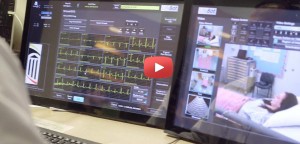
Watch the video of live use of the LifeBot 5 and Clinical Workstation at Lorien Healthcare and University of Maryland Upper Chesapeake.
During the pilot project, the physicians at the University of Maryland Upper Chesapeake Medical Center (UM UCMC) Emergency Department will conduct remote “telehealth” assessments of Lorien Bel Air patients. These patients will remain at Lorien in its new examination room which is fitted with video cameras, microphones and other specialized equipment. Working in consultation with the patient’s attending physician, UM UCMC physicians will analyze a patient’s status and any change of condition and will determine a course of treatment including whether it is medically necessary to transfer the patient to UCMC’s emergency room.
Lyle E. Sheldon, CEO of UM UCH said, “We are excited about the possibilities of using this technology to get a patient assessed earlier and maybe to avoid an unnecessary trip to our emergency department. Pilots like this also afford the opportunity to build closer relationships with our community partners in health care such as Lorien Health.”
Louis G. Grimmel, Sr., CEO of Maryland – based Lorien agreed. “Our Lorien Bel Air community has been a preferred location for quality assisted living and nursing care for over 10 years. We’re very excited to participate in this grant project as we are dedicated to continual innovation and investment in new technologies to meet the needs of our customers in the ever evolving health care system.”
Lorien Bel Air is connected to UM UCMC with the LifeBot Telemedicine system. According to Kerry Fletcher, COO at LifeBot, “Advanced Telemedicine is the solution to improved patient care while reducing costs, and LifeBot is proud to participate in the grant initiative. The LifeBot 5 is a ‘mobile micro-hospital’ which provides the consulting physician with not only multiple camera views for complete visual assessment but also the same real-time physiological data as if the patient was located in their ICU. Having access to the patient’s data, in a format that makes true Health Information Exchange (HIE) possible, allows the doctor to make better decisions without the disruption or cost associated with non-emergency transport.”
Lorien Bel Air is connected to UM UCMC with the LifeBot Telemedicine system. …The goal of this partnership will be to improve the patient’s quality of life by reducing avoidable acute care transfers, admissions and re-admissions.
The goal of this partnership will be to improve the patient’s quality of life by reducing avoidable acute care transfers, admissions and re-admissions. The intent is to create a sustainable care model that can be replicated in additional locations.
The pilot will run from December 2014 until July 2015 with a final report due to the state at that time. Maryland Emergency Medicine Network will be providing the consultative services on behalf of the UM UCMC Emergency Room. For more information about the grant, call 443-643-4219 at UM UCH.
About University of Maryland Upper Chesapeake Health
University of Maryland Upper Chesapeake Health (UM UCH) is a community based, not-for-profit system located in Harford County, Maryland, and dedicated to maintaining and improving the health of the people in its communities through an integrated health delivery system that provides the highest quality of care to all. UM UCH owns and operates UM Upper Chesapeake Medical Center in Bel Air, UM Harford Memorial Hospital in Havre de Grace, Upper Chesapeake Health Foundation and the Senator Bob Hooper House, an assisted living facility specializing in hospice care located in Forest Hill. UM Upper Chesapeake Health is also an affiliate of the University of Maryland Medical System. One of the largest private employers in Harford County, Upper Chesapeake employs almost 3,000 team members. Visit www.umuch.org to learn more.
About Lorien Health Systems
Lorien Health Systems is family owned and operated company that offers a continuum of services for seniors, including health and wellness programs, community – based services, inpatient skilled nursing and rehabilitation services, long term care services, and assisted living community housing. Lorien has over 2,000 employees and operates five Assisted Living and nine Skilled Nursing facilities in Central Maryland including Harford, Howard, Carroll and Baltimore counties. The company also includes Advantage Fitness and Rehabilitation, which provides inpatient and outpatient services, and a licensed Residential Service Agency which provides community-based services under its new “Lorien at Home” program.

After considerable preparation LifeBot is about to release the first fully portable ultrasound equipped LifeBot 5. This will be the first and only portable ultrasound system designed to send live ultrasound with built in wireless connectivity management and simultaneous full patient physiological parameters.

Above image shows the popular LifeBot 5 system with integrated ultrasound capabilities. Unique to the design is built in connectivity, multiple cameras, sending of a host of other critical patient physiologic data.
Below image shows four active cameras, including ultrasound all being received on the LifeBot Clinical Workstation system.
The ultrasound system will be complimented with nine probes for many different procedures. It is expected to be popular for fast assessment of patients in outpatient, senior care, or emergency situations. Ultrasound is for a wide range of applications, from guidance, to monitoring therapeutic treatments, ophthalmology, vascular imaging, urodynamics, telemedicine, and general purpose imaging.
But, what is unique about the integration is that live ultrasound images may be sent from anywhere and at any time to remote physicians, along with video, audio, and a long list of critical physiologic patient information.
The images shown here are for the benefit of those who already have LifeBot 5 systems ordered with ultrasound or that may wish to add this capability to their portable telemedicine systems.
Since the LifeBot 5 system is a fully modular construction, it may be easily updated or upgraded while, at the same time, controlling such costs.